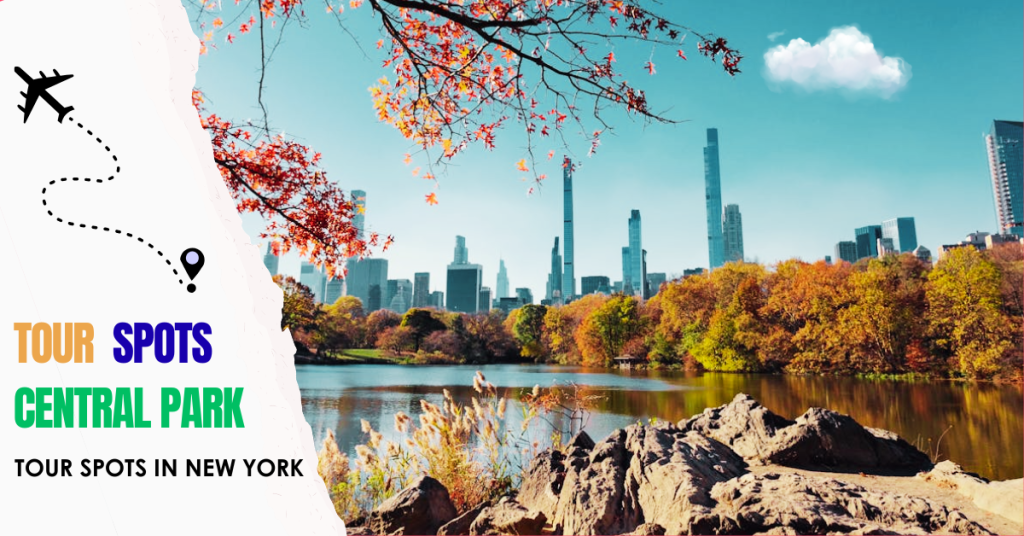
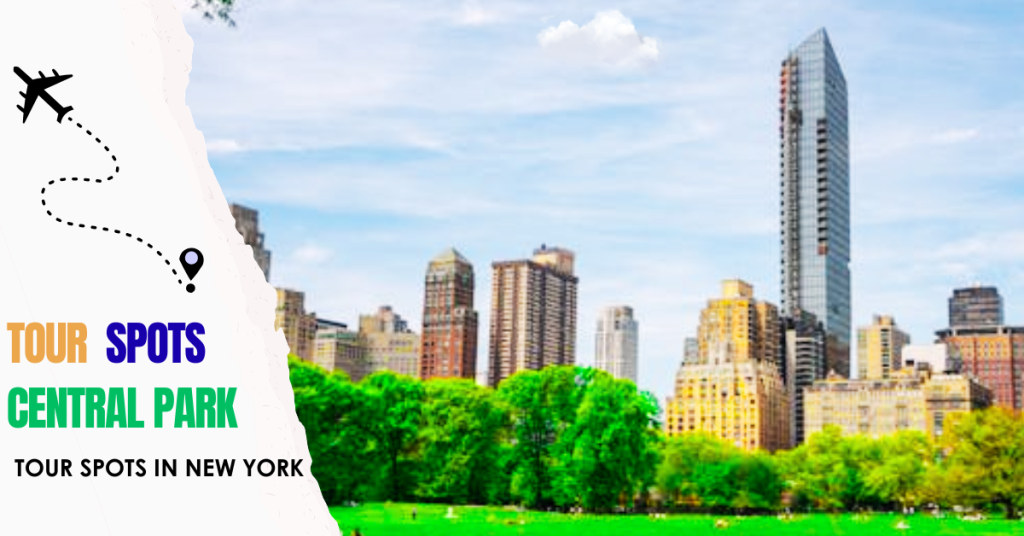
Plan the perfect Central Park tour with our expert guide. Discover 10 must-see spots, hidden gems, food, culture & tips to make the most of Central Park, New York
Central Park Tour: 10 Must-See Spots In New York
Central Park, New York City
Introduction: Why Central Park Should Be Your First Stop in NYC
It is like stepping from the hustle and bustle of Manhattan into a grove of mighty oak trees, a glistening lake, and endless grassy meadows. That’s what a walk through Central Park feels like—and once you visit, you’ll see why this park has been New York City’s favorite retreat for more than 160 years.
Central Park isn’t just a park. It’s New York’s green lung, the spiritus rector of Manhattan, and one of the world’s greatest man-made urban parks. At 843 acres in the middle of Manhattan, Central Park is visited by over 42 million people a year—more than any of the national parks in the US. But it is never one of those “tourist” places, even on a crowded Saturday morning.
Quick Facts About Central Park
Central Park — At a Glance
Location: Midtown and Upper Manhattan, New York City, NY 10024
Best Time to Visit: April to June and September to November
Park Size: 843 acres (341 hectares)
Entry Fee: Free — open to the public 365 days a year
Opening Hours: 6:00 AM to 1:00 AM daily
Famous For: Iconic skyline views, Bethesda Fountain, rowboats, concerts, picnics, and the zoo
History of Central Park: How a Vision Became a New York
Central Park’s history starts in 1853, with an act of the New York State Legislature to acquire more than 700 acres of hilly, swampy land in Manhattan. Small farms, pig pens, and bone-boiling factories were then located there—not a typical setting for a luxury park.
In 1858, landscape architects Frederick Law Olmsted and Calvert Vaux were awarded the prize in a design competition for their Greensward Plan. They had a vision: transform the city that was the fastest-growing in the US into a pastoral, natural landscape. They wanted the working class, immigrants, and families to experience the benefits of nature that were normally reserved for the elite.
It took almost 20 years to build and involved transporting nearly 10 million carts of rock and dirt. More than 500,000 trees were planted. The end result was a landscape masterpiece. In 1963 Central Park was named a National Historic Landmark and has been featured in more than 300 films and television shows. It is now overseen by the Central Park Conservancy, which has spent more than $1 billion on restoration since 1980.
Location and How to Reach Central Park
The park runs from 59th Street (Central Park South) to 110th Street (Central Park North) and from Fifth Avenue to the west on Central Park West. It’s located at the very geographic center of Manhattan and is one of the most convenient Central Park tourist attractions in New York City.
It’s easy to get here. It’s got 18 official entry points and is serviced by over 12 subway lines. Applying a Central Park tour, our favorite park entrances are the Grand Army Plaza entrance at 59th Street and 5th Avenue (to visit the southern part of the park) and the 72nd Street transverse (to visit the Bethesda Fountain). It takes just 10 minutes to walk to the park from Midtown Manhattan. Cabs, Citi Bikes, and Ubers can drop you off at the door.
Top 10 Central Park Places Every Visitor Must See
There’s more to a tour of Central Park than just strolling across the lawns. Central Park is made up of hundreds of “neighborhoods,” each with their own personality, history, and vibe. Here are the 10 must-see Central Park places to visit.
1. Bethesda Terrace and Fountain — The Heart of Central Park
If there is one spot that defines the soul of Central Park, it is Bethesda Terrace. Situated at the 72nd Street transverse, this magnificent two-level terrace descends to the iconic Bethesda Fountain—officially called the Angel of the Waters—which has been a gathering place for New Yorkers since 1873. The bronze angel crowning the fountain was created by Emma Stebbins, the first woman to receive a public art commission in New York City.
The terrace and fountain sit at the edge of the 22-acre Conservatory Lake and are flanked by the elegant Bethesda Arcade below, whose ceiling tiles are among the finest examples of encaustic tile work in the United States. On warm afternoons, musicians perform beneath the arcade, singers fill the air with opera and jazz, and families gather around the fountain basin.
Why visit: It is the visual centerpiece of the park and arguably the most photographed location in all of Central Park.
- Best time: Spring and early autumn when the surrounding trees frame the fountain with color.
- Tip: Arrive early on Sunday mornings for a peaceful, uncrowded experience before the crowds gather.
2. The Great Lawn — Perfect for Picnics in Central Park
The Great Lawn is a 55-acre oval-shaped meadow between 79th and 85th Streets and is the most popular spot for picnics Central Park visitors will ever find. Here is where more than 500,000 people gathered to listen to Simon and Garfunkel’s famous 1981 free concert and the home of the yearly Metropolitan Opera and New York Philharmonic summer performances.
Eight softball fields, two basketball courts, and several bathrooms surround the lawn. During any weekend from April through October, you will see people laying towels, throwing frisbees, doing yoga, and taking pictures of the gorgeous Manhattan skyline of the Upper West Side just above the tree line. This is the best place for a picnic that Central Park visitors plan.
Best time: May through September, on warm weekend mornings.
Tip: Pack a picnic basket and snacks from the food trucks and arrive by 10 AM to secure a good spot in the middle.
3. The Ramble — Central Park's Secret Woodland Wilderness
Most Central Park tourist visitors never make it to the Ramble, which means they miss one of the park’s greatest treasures. This 36-acre woodland in the middle of the park — between 73rd and 79th Streets on the west side of the lake — feels nothing like Manhattan. Narrow winding paths twist through dense forest, over mossy boulders, across small wooden bridges, and along the stream that feeds the conservatory lake.
The Ramble is world-famous among birdwatchers. Because Central Park sits directly on the Atlantic Flyway migration route, over 200 species of birds pass through annually, and the Ramble’s dense habitat makes it the best observation point in the park. On spring mornings, the branches are alive with warblers, tanagers, and orioles. It is also home to Pale Male, a famous red-tailed hawk who has nested near the park since 1991 and inspired books and documentaries.
- Best time: Early April through May for peak spring bird migration.
- Tip: Download the Merlin Bird ID app before your visit—it uses your phone’s microphone to identify every bird you hear.
4. Strawberry Fields — The John Lennon Memorial
There can hardly be a Central Park location that is as emotionally charged as Strawberry Fields. This 2.5-acre teardrop-shaped memorial garden lies at the west entrance of 72nd Street, right opposite the Dakota Building, where John Lennon lived and was murdered in December 1980. It was the first garden to be dedicated in 1985 and is still maintained in part by a donation from Yoko Ono.
The black and white mosaic medallion with the single word IMAGINE is a gift of the city of Naples, Italy, at the heart of Strawberry Fields. The flowers, candles, and photographs are placed on the mosaic daily by fans worldwide. Hundreds of people come to listen to the moving candlelight vigil on the anniversary of the death of Lennon every 8th of December. It is among the most emotionally appealing stops in any central park.
Best time: Any day of the year — always peaceful and beautifully maintained.
Tip: Visit on a weekday morning for quiet reflection without the weekend tourist crowds.
5. Central Park Zoo — A Magical Central Park Tourist Experience
The Central Park Zoo, located in the southeast of the park close to 64th Street, is among the oldest zoos in the United States, having been founded in 1864. It now hosts more than 130 animals of three climate zones: the Tropic Zone (which is home to the piranhas, scarlet ibis, and free-flying birds), the Temperate Territory (which is home to the notoriously notorious sea lions and red pandas), and the Polar Circle (which is home to polar bears and penguins).
The zoo is a must-see place to be included in central park tours by families with children. Sea lion feeds at 11:30 AM, 2 PM, and 4 PM are extremely popular and cannot be missed. The nearby Tisch Children’s Zoo enables young children to feed and play with farm animals. Admission is reasonably priced—about $14 per adult and 9 per child—and the zoo can be peacefully covered within two hours.
Best time: Weekday mornings in spring and autumn to avoid peak weekend crowds.
Tip: Buy tickets online in advance to skip the entrance line and save a small discount.
6. Belvedere Castle — The Best View in the Entire Park
Overlooking the second-highest natural feature in Central Park, Belvedere Castle is not only a real architectural marvel but also a breathtaking prospect. The castle was constructed in 1869 by Calvert Vaux in a whimsical Victorian Gothic and Romanesque style and was not designed as an actual fortress but rather as a theatrical folly—a picturesque building to add to the landscape of the park.
Belvedere Castle is now home to the Henry Luce Nature Observatory, where guests can borrow binoculars and nature kits and take a stroll to explore the wildlife in the park. The castle has a main observation deck that is one of the most beautiful panoramic views in the entire Central Park—a view to the south of Turtle Pond and to the north of the Great Lawn. The castle is also a major weather observation site of New York City and the origin of the official weather data of Central Park that you see in weather predictions.
Best time: Golden hour (one hour before sunset) for extraordinary photography.
Tip: Entry to the castle and nature observatory is completely free.
7. The Central Park Conservatory Garden — A Hidden Formal Garden
The Conservatory Garden is one of the most beautiful and least visited secrets of Manhattan, at the northeastern corner of Central Park, at 105th Street and 5th Avenue. The only purely horticultural part of the park is this 6-acre formal garden, and it is one of the best in New York City for formal landscape design. The Conservatory Garden, unlike the naturalistic style of the rest of the park, is planned in three formal styles: the French (north), Italian (center), and English (south).
The Great Lawn of the Italian garden is lined with wisteria pergolas, which burst into purple blossoms in the month of May, making it one of the most photographed landscapes in the whole park. The English garden includes the Frances Hodgson Burnett Memorial Fountain—in honor of the author of The Secret Garden—and monthly seasonal plantings. It is an ideal location where visitors of Central Park can go on picnics, having a more sophisticated, calming environment without the Central Park populace.
Best time: May for wisteria and tulips, June for roses, October for autumn foliage.
Tip: The garden is open Tuesday through Sunday. No dogs, no bicycles — a genuinely peaceful retreat.
8. The Boathouse and Loeb Boathouse Lake — Row Through Central Park
The Central Park Boathouse on the 22-acre Conservatory Lake is one of the most romantic and iconic Central Park spots to experience. Between March and November, one can rent out old wooden rowboats on an hourly basis and row around the calm waters of the water, seeing the Manhattan skyline reflected in the water. It is simultaneously serene and surreal a journey—because you are, after all, rowing a boat in the heart of one of the most vertical cities on earth.
Located right on the lakeside, the Loeb Boathouse restaurant is among the most popular dining reservations in the park. Having brunch on the outdoor terrace with the rowboats on the lake, a Bloody Mary in hand, and the sounds of New York drifting through the leaves is a central experience on a tour of the park that can simply not be duplicated. And, although you may not be able to make a reservation, the outdoor bar also accepts walk-ups on a first-come basis.
Best time: Late spring and early autumn — rowboats available from approximately 10 AM to 5 PM.
Tip: Rowboats cost approximately $20 for the first hour. Gondola rides are also available with advance booking.
9. The Mall and Literary Walk — Central Park's Grand Promenade
The Mall is the sole straight in the whole of Central Park—a formal tree-lined avenue between 66th and 72nd Streets, which is the ceremonial axis of the park arrangement. Its southern part, the Literary Walk, is paved with the statues of the great authors and artists—the greatest number of statues of real people in any American park—Shakespeare, Robert Burns, Sir Walter Scott, and Fitz-Greene Halleck.
The American elm trees overhead furnish one of the finest canopies in the city. Within Central Park, there is one of the few remaining stands of American elms in North America—a tree species that was all but eliminated by Dutch elm disease in the 20th century. There is nothing purer than taking a stroll beneath this green cathedral on a sunny spring morning as a central park tourist. Musicians, roller skaters, and street performers are a constant presence on the wide promenade, and they contribute to the party air.
Best time: Spring for green canopy, autumn for golden foliage, any weekend for street performers.
Tip: Look up — the elm canopy is the real star of the Mall.
10. Jacqueline Kennedy Onassis Reservoir — The Iconic NYC Running Track
The largest water body in Central Park is the Jacqueline Kennedy Onassis Reservoir, which occupies 106 acres and spans between 86th and 96th Streets. It was built in 1862 as one of the first water supply reservoirs in Manhattan and has some half a billion gallons of water in it, and is no longer used as a drinking source of water in Manhattan. In 1994, it was renamed after the former First Lady, who came to jog along here in her later years, living in New York.
The 1.58-mile cinder circle surrounding the reservoir is the most renowned jogging path in America—maybe in the world. Every morning or evening, hundreds of runners run around the track, enjoying one of the best city landscapes imaginable: the skyline of the Upper East Side and Upper West Side is reflected in the standing water, and the canopy of Central Park envelops the whole picture. It is an archetypal central park location and a profound New York experience.
Best time: Early morning for breathtaking light on the water; autumn for spectacular foliage reflections.
Tip: Running is counterclockwise by convention. Walkers use the outer gravel path.
Budget Planning
Entering Central Park is completely free. Most activities within the park are low-cost or free: walking, jogging, birdwatching, picnicking, and attending outdoor concerts and performances all cost nothing. The main paid activities are the zoo ($14 adults), rowboat rental ($20/hour), ice skating at Wollman Rink ($15-20), and carousel rides ($4). Budget $20-30 per person for a full day, including food and one paid activity.
Safety Tips
- Very safe in the daytime – Central Park is as safe as any large city park in the United States.
- Do not visit isolated places at night. Always use main roads that are well-lit in case of evening visits.
- Lock the property and check for pickpockets around popular attractions during the high season of tourism.
• Cyclists abide by the park regulations: they have to ride on the special lane, passing pedestrians, and never on the footpaths.