the best central park place in NYC. Discover 10 iconic spots, local food, travel tips & culture. Plan your perfect central park tour now!
Central Park Place: 10 Beautiful Spots for a Tourist Place
Welcome to New York City's Greatest Central Park Place
Imagine stepping off a roaring Manhattan sidewalk and watching the entire city simply dissolve behind a curtain of oak, elm, and cherry trees. No taxis. No construction drills. Just birdsong, the laughter of children, and the soft crunch of gravel underfoot. That is what happens the moment you enter the most beloved central park place on Earth — and it is a feeling you will carry with you long after you leave New York.
Central Park is not just a park. It is New York City’s living room, its outdoor museum, its concert hall, and its collective exhale. Stretching across 843 magnificent acres in the heart of Manhattan, it welcomes more than 42 million visitors every year — more than Yellowstone, the Grand Canyon, and Yosemite combined. Whether you are planning your very first central park tour, arriving as an enthusiastic central park tourist from abroad, or daydreaming about sun-soaked picnics in Central Park on a warm spring afternoon, this guide was written for you.
I have explored Central Park in every season and at every hour — from misty 6 AM jogs around the Reservoir to moonlit strolls past a snow-covered Bethesda Fountain. What follows is the most honest, detailed, and genuinely useful guide to Central Park you will find in 2026. Everything here is real. Everything is verified. And everything is designed to make your visit unforgettable.
Quick Facts at a Glance
The Remarkable History of Central Park
Central Park came into being from a radical democratic vision. In the mid-19th century, New York City was rapidly industrializing, and civic leaders understood the need of the working classes to have access to green space, fresh air, and natural beauty. In 1858, a design competition was won by landscape architects Frederick Law Olmsted and Calvert Vaux with their visionary ‘Greensward Plan,’ which was a comprehensive plan to transform 843 acres of rocky, swampy, and largely uninhabitable land in upper Manhattan into America’s first major landscaped urban park.
This was an outstanding construction project. During almost 20 years, nearly 10 million cartloads of stone and soil were moved, 270,000 trees and shrubs were planted, and 40 miles of lakes, bridges, meadows, and carriage drives were built almost from scratch by over 20,000 laborers. Whole neighborhoods were razed, and over 1,600 inhabitants, largely impoverished Irish and Black working-class people, were evicted to create the world’s most iconic urban park.
The park was opened to the public in 1858 and completed in 1876. It became the model for urban park design all over the world, inspiring similar projects at Golden Gate Park in San Francisco and Hyde Park in London. The Central Park Conservancy began a groundbreaking restoration project in 1980, following years of neglect and deterioration in the 1970s due to crime, vandalism, and budget cuts. Today, the park, in better shape than at any time in its 165-year history, is a National Historic Landmark.
Top 10 Central Park Places Every Tourist Must Visit
The top ten landmarks of any good central park tour. There’s no one way to describe the many historic monuments and the secret gardens, each with something irreplaceable. Make this section your own field guide by checking off each site as you visit!
1. Bethesda Fountain & Terrace—The Park's Iconic Heart
Why Visit: Central Park has a soul; Bethesda Fountain is its soul. This monumental centerpiece blocks off the lake and, of course, is the most iconic central park place in all 843 acres. The fountain’s bronze angel, known as the Angel of the Waters, was carved by Emma Stebbins in 1868, the first commission for a major public sculpture for the city of New York. This sandstone terrace around the hotel, the panoramic lake vistas, and the ever-present street musicians combine to make this quite unique anywhere in the world.
Highlight: Cross the 72nd Street Bridge via the underground arcade to the terrace, whose ceiling is adorned with extraordinarily detailed Minton tile work, which most visitors walk right past. One of the best pictures you can take in NYC is from the terrace steps looking north to the Bow Bridge.
Best Time & Tips: Come early – before 8 AM – for the gold light and almost no crowds. During the summer evenings, there are performers and impromptu concerts. When it snows in winter, the beauty of the frozen fountain in white-draped tree trimming is spectacular.
2. Strawberry Fields & the Imagine Mosaic
Why Visit: Stratford is on the west side, just outside 72nd Street, a serene 2.5-acre site honoring John Lennon. The famous ‘Imagine’ mosaic is a circular black and white inlay that is set in the pathway and attracts pilgrims, music fans, and peace seekers from all over the world. Lennon was killed, just steps from the Dakota, on Dec. 8, 1980, while he was residing in the nearby Dakota Building. People drop off fresh flowers and handwritten notes at the mosaic on a daily basis all year long.
Highlight: Thousands come together on October 9 (Lennon’s birthday) and December 8 (his death day) for moving, spontaneous memorial events. This area, known as the Ramble, is one of NYC’s best places to view birds, boasting more than 200 species.
Best Time & Tips: Make a trip during the week and come for quiet reflection on a weekday morning. The Ramble behind Strawberry Fields is easy to get lost in; be sure to have the Ramble map of the park before you enter.
3. The Bow Bridge—Victorian Elegance Over The Lake
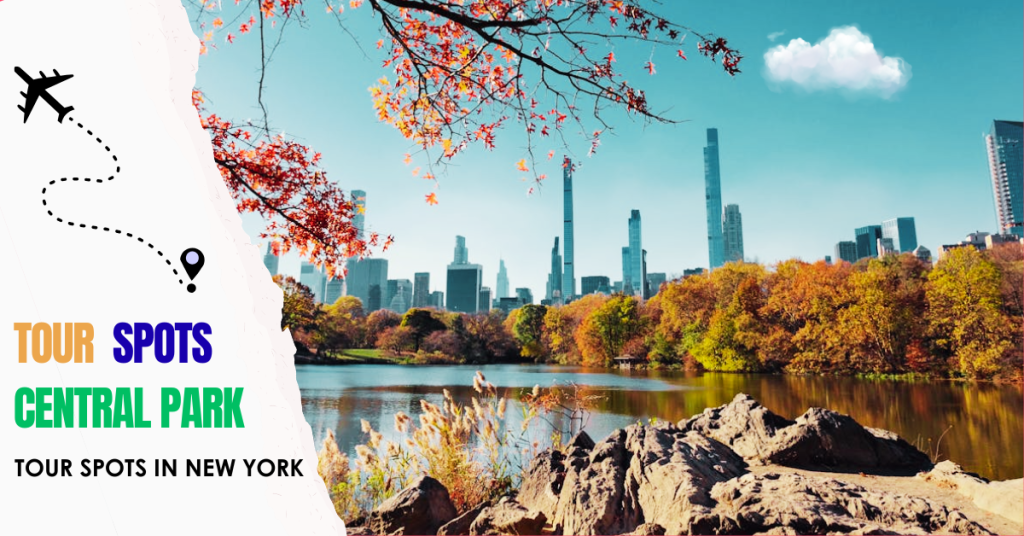
Why Visit: Built in 1862, the Bow Bridge is the oldest and most beautiful of Central Park’s seven cast-iron bridges. It is a Victorian ironwork architectural gem, stretching 60 feet across the lake from Cherry Hill to the Ramble, and it is one of the most photographed buildings in New York City. The reflections of the bridge itself and of the surrounding foliage on the lake make for the almost unparalleled beauty of the scene, especially in autumn.
Highlight: A signature view of the park and one of the most iconic images of New York. Stand in the center of the bridge and face south to Bethesda Fountain. The lake is set to rise with mist in the morning, giving the scene a dreamlike appearance that is well worth an early morning viewing.
Best Time & Tips: Fall mornings for fall colors; early spring when Cherry Hill’s trees start to flower. The bridge is quite crowded on Saturday and Sunday: take photos during the week.
4. The Great Lawn—Central Park's Legendary Gathering Ground
Why Visit: No lawn in NYC could rival the raw electricity of the Great Lawn on a hot summer day. A 55-acre, well-manicured grass expanse between 79th and 85th Streets, it’s been host to some of the most iconic events in American cultural history—for instance, Simon & Garfunkel’s 1981 free concert, which attracted 500,000 fans. This is the Central Park place and home of the Metropolitan Opera, the New York Philharmonic, and numerous film shoots. It’s also the one place in Central Park that is most popular for picnics.
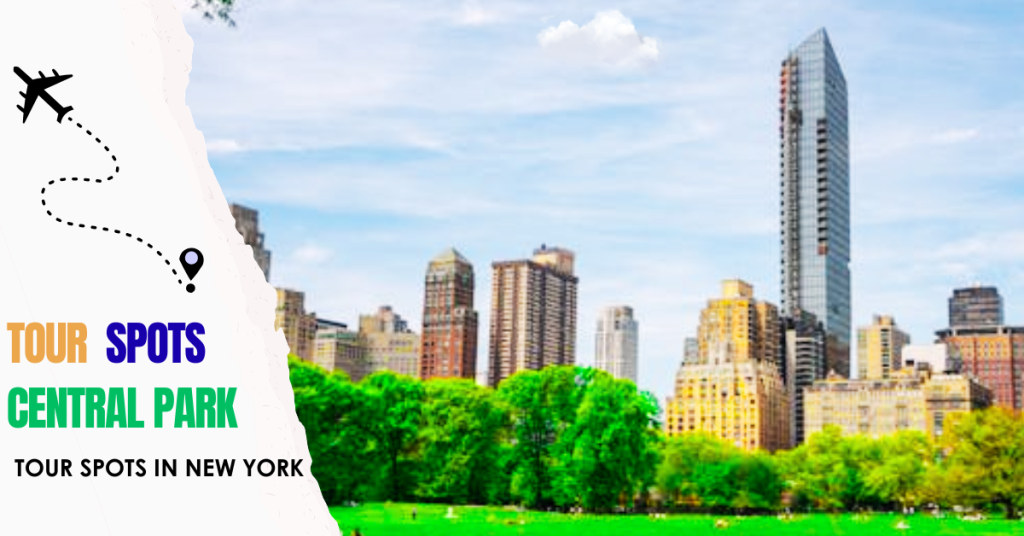
Highlight: The background of the skyline—a circle of Manhattan’s most iconic residential towers that stretch above the tree line—makes each moment here feel like it’s out of a movie. On weekends, eight baseball diamonds are in constant use, making for pure, unfiltered urban joy.
Best Time & Tips: Afternoons during the spring and summer. Get to the event very early on event days. If you want a quieter picnic area, go towards the north end at 85th Street. The 81st Street entrance is close to the restrooms.
5. The Conservatory Garden — Central Park's Hidden Secret
Why Visit: The Conservatory Garden is Central Park’s sole formal garden and one of the most beautiful secrets, hidden behind the ornate Vanderbilt Gate at Fifth Avenue and 105th Street. Six acres that are divided into three sections: French Garden (circular reflecting pool, geometric symmetry); Italian Garden (long alley of crabapple trees, wisteria pergola); and English Garden (a wildflower meadow with the bronze Secret Garden memorial fountain). The quietest and purest central park square in the entire park.
Highlight: In the French Garden, thousands of tulips and cascading wisteria over the Italian pergola—some of the most impressive displays of the season in all of New York—happen in April and May. Dogs and ball sports are not permitted in the garden, creating a true sense of peace.
Best Time & Tips: Tulips and wisteria are in spring; rich amber is in fall. Be at the opening time on Saturday and Sunday mornings — it gets packed with photographers and wedding parties.
6. The Central Park Zoo — Wildlife in the Heart of Manhattan
Why Visit: Since 1864, the Central Park Zoo, operated by the Wildlife Conservation Society in the park near the entrance on Fifth Avenue at 64th Street, has been entertaining visitors with its exhibits. It’s small, measuring only 6.5 acres, but extremely rich with more than 130 species spread out across three climate zones: the Tropic Zone, with rainforest birds and reptiles; the Temperate Territory, with red pandas and snow monkeys; and the Polar Circle, with sea lions and penguins.
Highlight: The three feedings of sea lions are a favorite activity. There’s excitement for kids at the 4D Theater. A friendly farm animal meets young guests in a secure and contained area at the adjacent, free-admission Tisch Children’s Zoo.
Best Time & Tips: Early morning during the weekdays when the animals are most active, and people aren’t. Adults: ~$20; children: $15. Enjoy a stroll around nearby Conservatory Water.
7. Belvedere Castle — The Park's Highest Panoramic Viewpoint
Why Visit: Located in a dramatic position on Vista Rock, the second-highest natural site in Central Park, Belvedere Castle was designed by Calvert Vaux and Jacob Wrey Mould and completed in 1869. It was designed as a Victorian folly (a decorative structure built for no practical purpose) but is now used as a weather observation station and visitor education center by the Central Park Conservancy. Its views from its terrace are some of the largest in the entire park.
Highlight: The Great Lawn continues north from the castle terrace, Turtle Pond glistens immediately below, and the Manhattan skyline extends up all the way to the north. Secure a free nature kit (binoculars and field guide) from the Henry Luce Nature Observatory inside for exploring the surrounding ramble.
Best Time & Tips: Clear mornings throughout the year. Fall is an especially beautiful time if the surrounding trees are also a golden color. Entry is free. The castle is surrounded by superb birdwatching habitat.
8. Conservatory Water (Model Boat Pond) — A Family Classic
Why Visit: Conservatory Water is a formal pond between the 72nd and 75th Street entrances on the east side of the park and has been used as a model sailboat racing venue since the 1930s. Each Saturday morning during the spring and summer, the boat races are held on the water with the racing models controlled by a remote, and spectators gather on the benches. Two favorite bronze statues are located nearby—”Alice in Wonderland” (1959), a New York institution for generations of children to climb, and “Hans Christian Andersen” (1956), where free story time sessions are offered every Saturday during the summer.
Highlight: One of the city’s most interactive sculptures is the Alice in Wonderland statue. The giant mushroom and bronze figures have been a playground for children for more than 60 years. A nearby café (Loeb Boathouse) offers a coffee break with a view of the lake.
Best Time & Tips: Spring/Summer Saturday mornings for model boat races. In the morning, a relaxed and unrushed experience on weekdays. Family-friendly and ideal for kids ages 2-12.
9. Sheep Meadow — The Park's Premier Sunbathing Lawn
Why Visit: Sheep Meadow was once a real farmland pasture home to a flock of Southdown sheep from 1864 up until 1934, when it became the park’s most popular recreation meadow. Today, the 15-acre area of meticulously tended grass is one of the most democratic and life-affirming spaces in New York City. The city skyline of Central Park West rises behind a forest of old trees as students study, couples lie on the beach, musicians jam, and a screen plays the 45°-45°-90° triangle. It’s the essence of the stroll through Central Park for the tourist.
Highlight: There is no sporting activity allowed on Sheep Meadow—no frisbees, no balls, no drones—making it a very special, peaceful atmosphere. It’s one of the best places to have a picnic in Central Park, especially late afternoon during the golden hour when crowds tend to be smaller.
Best Time & Tips: The spring and summer weekends are the most active. The meadow is closed from November to mid-April to give the grass time to recover. Pack a sandwich from Zabar’s deli on Broadway and a blanket.
10. The Jacqueline Kennedy Onassis Reservoir — NYC's Most Scenic Running Route
Why Visit: The Jacqueline Kennedy Onassis Reservoir is the biggest object (106 acres) in the whole northern section of Central Park, located from 85th St. east to 96th St. west. In addition to being named after former First Lady Jacqueline Kennedy Onassis, who used to jog the 1.58-mile (2.5 km) perimeter of the reservoir when she lived on nearby Fifth Avenue, the reservoir has become a famous urban running route and one of the best places in New York to walk and experience the view.
Highlight: The reflections of New York’s 360-degree skyline on the water are stunning in every season. When looking west at the reservoir, the twin San Remo and El Dorado buildings can be seen peeking out from above the trees. The combination of water and light when watching the sunrise is one of the best sights to see in New York City.
Best time/what to look for: The best time to visit is at sunrise, when the light and color are most dramatic. Autumn evenings also provide great views because of the reflection of foliage on the water. Runners typically run counterclockwise around the reservoir. The gravel surface on the running path will provide a more joint-friendly surface when compared to running on pavement.
Dining and Food Around Central Park
The Upper West Side and Upper East Side of Central Park have many of the best restaurants in New York City, from famous delis to upscale dining establishments.
Dishes/Foods You Must Eat
- Pizza New York Style – Thin-crust pizza that you can fold and has the perfect amount of char. Getting a slice from a street cart at the south entrance of Central Park is a truly New York moment.
- Bagel with Lox and Cream Cheese—The quintessential New York breakfast. One of the best places to get this breakfast item is H&H Bagels (2239 Broadway) or across the street from this location at Ess-a-Bagel.
- Hot Dogs and Giant Pretzels—Available at many locations throughout Central Park, these food items are very well-known to both tourists and residents alike. These are unique to New York City and can be purchased for very little money.
- Black and White Cookie—A New York original cookie consumed by people all over the city. Black and white cookies are made with half vanilla icing and half chocolate icing. Many bakeries and delis in Central Park sell black and white cookies.
- Lobster Roll—If you’re near Central Park, you can purchase a fresh lobster roll that is made in the tradition of Maine at Luke’s Lobster, along with a reasonable price!
Your adventure in Central Park starts now!
After more than 165 years, Central Park still fulfills Olmsted & Vaux’s vision that it belongs to all people—and it returns far more than you contribute. Each of the 10 sites reflects an aspect of New York’s history, creativity, complexity, and extraordinary beauty, located in one of the most densely populated cities on the planet.
Whether planning your first visit to Central Park, hosting a sun-filled picnic with your family, or simply looking for a quiet escape from one of the busiest cities on the planet, Central Park is ready for you to explore. Every trail leads to a discovery worth visiting, and every season presents something new!
New York City is a premier destination in the world, and Central Park is its prime gift to you. Book your trip now, download your Central Park map, and use at least one whole day to enjoy exploring this incredible park.